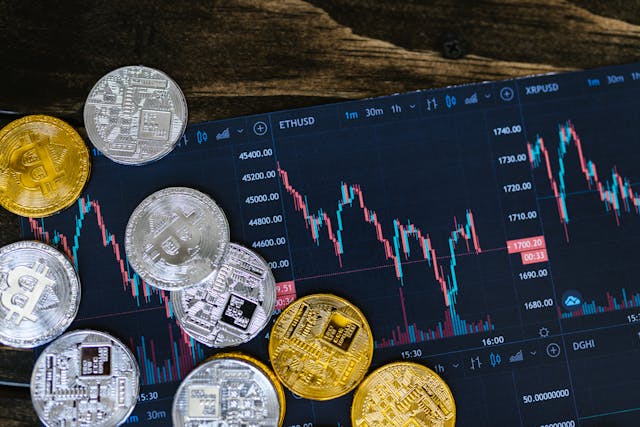

Crypto trading has rapidly evolved from a niche experiment into one of the most dynamic and lucrative areas of global finance. Over the past decade, millions of traders have entered digital markets seeking high returns, decentralized opportunities, and around-the-clock access that traditional stock exchanges simply can’t match. In 2025, the total cryptocurrency market capitalization exceeds $3.4 trillion, with daily trading volumes surpassing $120 billion—a testament to how deeply integrated crypto assets have become in both retail and institutional portfolios.
Whether you’re a beginner exploring Bitcoin and Ethereum or a professional investor using automated bots and on-chain analytics, understanding the mechanics, risks, and strategies behind crypto trading is essential for long-term success. This comprehensive guide dives deep into how the market works, real-world statistics, proven trading strategies, risk management frameworks, and actionable insights that will help you navigate—and profit from—the ever-evolving world of crypto trading.
Table of Contents
1. Why Crypto Trading Matters Now
The crypto trading industry has evolved from being a niche internet experiment into a multi-trillion-dollar global financial activity over the past decade. Originally a marketplace for tech-savvy enthusiasts trading Bitcoin on forums, Bitcoin has developed into an interconnected ecosystem involving hedge funds, institutions, sovereign wealth funds, retail investors, and algorithmic traders.
The cryptocurrency market in 2025 is bigger, faster, and more integrated with traditional finance than ever before. In November 2025, CoinMarketCap reported that the crypto market capitalization was around $3.4 trillion, and daily trading volumes were over $120 billion. Approximately $2.2 trillion of that market capitalization is made up of bitcoin alone – more than the entire market value of most major corporations combined.
There are a number of cryptocurrencies that make up a significant share of daily crypto trading volumes, including Ethereum, Binance Coin (BNB), Solana, and stablecoins like USDT and USDC.
A crypto market never sleeps, unlike stock markets that close each day. One of the defining characteristics of crypto trading is its round-the-clock nature, which makes it both highly attractive and highly demanding. It is possible for a trader in Singapore to react to news out of the United States. The Federal Reserve can arbitrage price differences between Binance and Coinbase within seconds, while an algorithm in London can arbitrage a difference as early as 3:00 in the morning.
1.1. Why Crypto Trading Is Exploding in 2025
As of 2025, the global crypto market capitalization has exceeded $3.4 trillion, reflecting unprecedented institutional participation.
Several major catalysts explain why crypto trading has remained in the spotlight through 2024–2025:
- Institutional Adoption
- Spot Bitcoin ETFs launched in the U.S. in 2024 drew billions in inflows within months.
- Large asset managers such as BlackRock, Fidelity, and ARK Invest now hold regulated Bitcoin products, legitimizing crypto trading in traditional portfolios.
- Institutional desks now use crypto futures and options to hedge or gain exposure.
- Emerging Market Growth
- According to Crypto.com’s 2025 report, global crypto ownership rose to 659 million people by the end of 2024, a 34% increase from the year before.
- Countries like India, Nigeria, and Vietnam have some of the highest adoption rates per capita, reflecting how crypto trading has become a tool for financial inclusion in regions where fiat currencies face inflation or limited banking access.
- Macroeconomic Tailwinds
- Inflation volatility and interest rate shifts have pushed investors to diversify.
- Bitcoin’s “digital gold” narrative and DeFi yield products have attracted capital seeking both safety and return.
- Meanwhile, central bank digital currency (CBDC) discussions globally have renewed curiosity about blockchain-based assets.
- 24/7 Accessibility and Technology
- Mobile-first platforms and apps like Binance, Coinbase, and OKX have made crypto trading possible from smartphones anywhere on earth.
- APIs, algorithmic trading bots, and DeFi aggregators have opened the door for both retail and quant traders to build sophisticated setups.

1.2. The Economic Role of Crypto Trading
Crypto trading is not just speculation — it plays a structural role in the broader blockchain economy. Each token represents access to a project, protocol, or use-case. Liquidity in those tokens enables developers to raise funds, DeFi protocols to function, and ecosystems to thrive.
For instance:
- Liquidity in Ethereum helps DeFi apps like Uniswap, Aave, and MakerDAO function.
- Trading volume in stablecoins reflects demand for digital cash equivalents in cross-border settlements.
- Derivative trading volume on Bitcoin helps price discovery and risk management for large holders.
The presence of continuous crypto trading activity also provides a real-time barometer of sentiment across global markets — something no other asset class provides with such granularity.
1.3. Comparative Scale: Crypto vs Traditional Markets
| Market Type | Global Market Cap (approx.) | Trading Hours | Retail Participation |
| Global Stocks | $110 trillion | Weekdays only | Moderate |
| Forex (FX) | $7.5 trillion daily volume | 24/5 | High |
| Crypto | $3.4 trillion market cap, $129B daily volume | 24/7 | Very high |

While still smaller than equities or FX, crypto’s velocity — how fast capital moves — is unmatched. Average token turnover is several times per month, meaning crypto trading volumes are exceptionally dynamic relative to market capitalization
1.4. Market Behavior and Volatility
Crypto is famous for volatility — but traders view this as opportunity.
Between January 2024 and November 2025:
- Bitcoin’s price has fluctuated between ~$35,000 and ~$110,000.
- Ethereum has ranged roughly from $1,800 to $3,800.
- Solana and other altcoins have seen 200–400% annualized swings.
Such volatility is not random: it is driven by macro announcements, on-chain data, and speculative leverage in futures markets. In the traditional equity world, a 2% daily move is big. In crypto trading, 5–10% intraday moves are common.
This high variance, combined with 24/7 liquidity, makes crypto one of the most exciting and challenging markets for traders of all kinds.
1.5. The Psychological Side of Crypto Trading
Because the market never closes, traders face unique psychological challenges:
- FOMO (Fear of Missing Out): Prices can double overnight, pushing traders to chase pumps.
- Overtrading: Continuous access can lead to impulsive entries.
- Sleep Deprivation: 24/7 markets tempt traders to monitor positions around the clock.
- Greed and Panic: Sharp reversals test discipline more than any other market.
Professional crypto trading setups mitigate these risks by using automation, stop losses, and alert systems. Learning to manage emotions is as critical as understanding candlestick charts.
1.6. Regulation and Legitimacy
Once considered a gray-area market, crypto trading now operates under expanding regulatory frameworks:
- The European Union’s MiCA Regulation (Markets in Crypto Assets) is being implemented through 2025.
- The U.S. has introduced tax reporting rules for digital assets and clearer guidelines for stablecoins and ETFs.
- In Asia, countries like Singapore and Japan have strengthened licensing requirements for exchanges.
Regulation has both positive and negative effects: it reduces fraud and increases institutional confidence, but it may limit innovation in unregulated tokens. Either way, it legitimizes crypto trading as a mainstream financial activity.
1.7. How Crypto Trading Fits Into Portfolios
Analysts increasingly view crypto trading as a satellite or tactical allocation within broader portfolios:
- Diversification: Crypto shows low long-term correlation with traditional assets.
- Alpha Generation: Active trading strategies can outperform simple buy-and-hold if managed with discipline.
- Hedging Tool: Futures and options on crypto assets can hedge macro exposure (e.g., inflation, currency risk).
A study by Fidelity Digital Assets (2024) found that institutional portfolios with even a 1–5% allocation to digital assets improved Sharpe ratios over 5-year horizons. That research supports the growing acceptance of crypto trading as a legitimate diversification strategy.
1.8. Looking Ahead — The Next Evolution
The next phase of crypto trading may blend traditional and decentralized systems:
- On-chain trading infrastructure (DEXs) is expected to rival CEX volume within a few years.
- AI-driven algorithms will automate portfolio rebalancing and sentiment-driven trades.
- Tokenized real-world assets (RWA) — such as bonds, commodities, or equities — will be tradable on-chain, merging traditional markets and crypto trading environments.
All this points toward one reality: crypto trading is no longer the future — it’s the present.
2. Market Structure and Real Stats You Should Know
2.1. Understanding Market Structure in Crypto Trading
Unlike traditional equities that operate within extended trading hours, crypto trading runs continuously across global time zones — no open or close bell.
Crypto trading requires a knowledge of how it works, who participates, and what data drives prices if you are going to trade successfully.
In contrast to traditional financial systems with centralized exchanges and market hours, crypto trading is a 24-hour, borderless, decentralized, and centralized system that interacts with each other in real time.
2.2. The Core Components of the Crypto Trading Ecosystem
| Layer | Description | Examples |
| Layer 1 Assets (Base Blockchains) | Foundational blockchains where transactions occur. | Bitcoin, Ethereum, Solana, Avalanche |
| Layer 2 & Scaling Solutions | Networks built on top of Layer 1 for faster, cheaper transactions. | Arbitrum, Optimism, Polygon |
| Centralized Exchanges (CEXs) | Traditional-style exchanges for order-book trading, custody, and fiat gateways. | Binance, Coinbase, Kraken, OKX, Bybit |
| Decentralized Exchanges (DEXs) | Peer-to-peer trading using smart contracts (no intermediaries). | Uniswap, Curve, PancakeSwap, 1inch |
| Derivatives & Futures Platforms | Offer leverage and futures contracts; vital for professional crypto trading. | CME Group, Binance Futures, Deribit |
| Custodians & Wallets | Manage asset storage and security. | Ledger, Fireblocks, MetaMask, Coinbase Custody |
| Data Aggregators | Provide price, volume, and liquidity analytics. | CoinMarketCap, CoinGecko, Glassnode, Messari |
| Regulators / Compliance Layer | Ensure legal operation in respective jurisdictions. | SEC (US), FCA (UK), ESMA (EU), MAS (Singapore) |
Each layer adds to the complexity of crypto trading, creating an ecosystem where retail users, institutions, and algorithms all coexist.
2.3. Market Capitalization and Volume Overview (2025 Snapshot)
According to Messari market insights, Ethereum layer-2 ecosystems have grown more than 200% year-over-year.
The average daily trading volume across top crypto assets often exceeds $120 billion. Let’s look at the real data points (approximate as of November 2025):
| Metric | Value (approx.) | Source |
| Global Crypto Market Cap | $3.4 trillion | CoinMarketCap (Nov 2025) |
| 24-hour Total Trading Volume | $129 billion | CoinMarketCap |
| Bitcoin Market Cap | $2.21 trillion | CoinMarketCap Historical Snapshot |
| Bitcoin 24-hour Volume | $34.3 billion | CoinMarketCap |
| Ethereum Market Cap | $490–520 billion | CoinMarketCap / CoinGecko |
| Stablecoin Market Cap (Combined) | $160 billion | CoinGecko |
| Top 10 Coins’ Share of Total Cap | ~85% | Messari Aggregated Data |
| Number of Active Cryptocurrencies | ~9,500+ | CoinMarketCap (Nov 2025) |
| Global Crypto Owners | ~659 million | Crypto.com Report (2025) |
Insight: Roughly 26% of all daily crypto trading volume comes from Bitcoin, with Ethereum contributing another ~15%. The rest is distributed across altcoins, stablecoins, and DeFi tokens.
2.4. Top 10 Cryptocurrencies (2025 Approximate Snapshot)

| Coin | Market Cap (USD) | 24h Volume (USD) | Dominance | Use Case |
| Bitcoin (BTC) | $2.21T | $34.3B | 64.5% | Digital store of value |
| Ethereum (ETH) | $500B | $18B | 14.7% | Smart contracts, DeFi |
| BNB | $88B | $1.9B | 2.6% | Exchange token (BNB Chain) |
| Solana (SOL) | $77B | $2.1B | 2.3% | High-speed blockchain |
| XRP | $64B | $1.5B | 1.8% | Cross-border payments |
| USDT | $112B | $25B | — | Stablecoin (USD pegged) |
| USDC | $47B | $7B | — | Stablecoin (USD pegged) |
| Cardano (ADA) | $45B | $1.2B | 1.3% | Smart contracts |
| Dogecoin (DOGE) | $32B | $1.1B | 0.9% | Meme coin / payments |
| Avalanche (AVAX) | $32B | $800M | 0.8% | Subnets / DeFi infrastructure |
(Values fluctuate daily; these numbers reflect typical late-2025 averages across multiple sources.)
2.5. Concentration of Liquidity
Even though there are nearly 10,000 tokens, crypto trading activity is highly concentrated. The top 10 cryptocurrencies account for:
- Over 85% of total market capitalization, and
- More than 70% of total daily trading volume.
This means serious traders should focus most of their attention on these highly liquid assets to reduce slippage and improve trade execution.
Liquidity in crypto trading is critical — a trade worth $100,000 in a top-10 coin executes instantly, while the same trade in a small-cap token could move the price by several percent.
2.6. Exchange Landscape — Who Dominates Crypto Trading Volume
Just as choosing from FCA-regulated forex brokers in the UK ensures safety in traditional markets, selecting top-tier crypto trading exchanges like Binance, Coinbase, or Kraken helps mitigate counterparty risk.
The venue you choose for crypto trading directly impacts your fees, liquidity, and execution quality.
Centralized Exchanges (CEXs)
| Exchange | 24h Trading Volume (USD, est.) | Global Users | Core Strengths | HQ / Jurisdiction |
| Binance | $27B | 150M+ | Deep liquidity, futures, options | UAE / Global |
| OKX | $12B | 50M+ | Futures, perpetuals, global reach | Seychelles |
| Coinbase | $6B | 110M+ | Fiat on-ramps, U.S. regulated | USA |
| Bybit | $5.4B | 20M+ | Derivatives & leverage tools | Dubai |
| Kraken | $2.8B | 10M+ | Security, regulatory compliance | USA |
| KuCoin | $2.3B | 27M+ | Altcoin selection | Seychelles |
| Bitfinex | $1.5B | 3M+ | Legacy liquidity | Hong Kong |
| CME Group (Futures) | $1.2B (BTC/ETH derivatives) | Institutional | Regulated futures & options | USA |
(Volumes from CoinMarketCap, CoinGecko, and exchange public reports — November 2025)
These CEXs collectively handle over 85% of total centralized spot and derivatives volume, showing that crypto trading remains largely concentrated in a few big players.
2.7. Decentralized Exchanges (DEXs)
DEXs have evolved into serious competitors for crypto trading.
Their rise signals a long-term shift toward non-custodial, transparent trading.
| DEX | 24h Trading Volume | Network | Key Feature |
| Uniswap v4 | $2.3B | Ethereum / Arbitrum | Leading AMM |
| Curve Finance | $900M | Ethereum | Stablecoin swaps |
| PancakeSwap | $650M | BNB Chain | Low fees, alt trading |
| dYdX v4 | $1.2B | Cosmos-based | Derivatives & perpetuals |
| SushiSwap | $180M | Multichain | Community DEX |
| Balancer | $120M | Ethereum | Custom liquidity pools |
DEXs now contribute 12–15% of total crypto spot volume, a number that was below 2% in 2020 — demonstrating a remarkable rise in on-chain crypto trading.
2.8. Trading Volume by Asset Category
| Asset Category | Share of Total Trading Volume (2025 est.) | Description |
| Bitcoin | 26% | Store of value, main speculative asset |
| Ethereum | 15% | DeFi & infrastructure backbone |
| Stablecoins (USDT, USDC, DAI) | 28% | Medium of exchange for trading pairs |
| Altcoins (Top 100) | 20% | Project tokens, governance coins |
| DeFi / NFTs / Meme Coins | 11% | Speculative, high-risk segment |
Stablecoins form a crucial backbone for crypto trading, functioning as the de facto unit of account. In fact, over 80% of all on-chain transactions use a stablecoin as one side of the pair.
2.9. Institutional vs Retail Participation
| Segment | Estimated Market Share (Volume) | Key Characteristics |
| Retail Traders | ~55% | Small-scale traders using CEX apps or DEX wallets |
| Institutional Investors | ~35% | Hedge funds, ETFs, family offices, market makers |
| Bots / Algorithmic Trading | ~10% | High-frequency or arbitrage strategies |
Crypto trading has evolved beyond retail. Institutional flows — especially through CME Bitcoin futures, ETFs, and custodial accounts — now account for a significant portion of total market activity.
ETFs and funds act as a bridge between traditional finance and crypto trading, creating smoother price discovery and adding legitimacy to the sector.
A recent Crypto.com Research Report revealed that over 580 million users globally now own crypto assets.
2.10. Stablecoins — The Lifeblood of Crypto Trading
Stablecoins are digital dollars that keep crypto trading running efficiently. They provide a stable reference point and are used for everything from arbitrage to yield farming.
| Stablecoin | Market Cap (Nov 2025) | Issuer | Blockchain(s) | Notes |
| USDT (Tether) | $112B | Tether Ltd. | Ethereum, Tron, Solana | Largest and most traded stablecoin |
| USDC (Circle) | $47B | Circle | Ethereum, Base | Growing in institutional use |
| DAI (MakerDAO) | $5.3B | Decentralized | Ethereum | Algorithmic overcollateralized stablecoin |
| FDUSD / PYUSD / Others | ~$10B | Multiple | Various | Newer entrants focused on regulation |
Stablecoins dominate crypto trading pairs — roughly 75–80% of all spot transactions include a stablecoin leg. For example, BTC/USDT and ETH/USDT are the two most traded pairs globally.
2.11. On-Chain vs Off-Chain Trading
According to the 2025 Chainalysis report, over 55% of Bitcoin transactions now occur on regulated exchanges. A key evolution in 2025 is the growing migration of liquidity on-chain.
| Type | Description | Pros | Cons |
| Off-chain (CEX) | Order matching and custody handled by centralized entities | Deep liquidity, fiat access | Custody risk, potential lack of transparency |
| On-chain (DEX) | Trades executed via smart contracts, users hold keys | Transparent, non-custodial | Gas fees, slippage on large trades |
Crypto trading will likely move toward a hybrid model — centralized liquidity with decentralized settlement — especially as DeFi derivatives gain traction.
2.12. Geographic Distribution of Crypto Trading Activity
| Region | Market Share (Volume) | Leading Hubs | Characteristics |
| Asia-Pacific | 42% | Singapore, Hong Kong, South Korea | High retail and institutional adoption |
| North America | 28% | USA, Canada | Institutional ETFs, regulated exchanges |
| Europe | 17% | UK, Germany, Switzerland | Strong compliance frameworks |
| MENA | 7% | UAE, Turkey | Tax advantages, high crypto penetration |
| Latin America | 6% | Brazil, Argentina | Inflation hedging demand |
Asia remains the epicenter of crypto trading, but U.S. ETF flows are shifting liquidity westward. The UAE and Singapore are growing as global hubs due to favorable tax and licensing regimes.
2.13. ⚠️ Market Integrity, Wash Trading & Fake Volumes
While most large exchanges have improved transparency, data providers still estimate that 10–15% of reported volume could be wash trading — artificial trades meant to inflate activity metrics.
In crypto trading, this can distort:
- Technical indicators (volume spikes)
- Exchange rankings
- Market-maker incentives
Reputable exchanges (Coinbase, Kraken, CME) and regulated ETFs report audited volumes, offering safer options for serious traders.
Chainalysis and Messari data suggest that 2025 wash trading levels have declined from over 40% in 2019 to under 15%, reflecting improved oversight.
2.14. Quick Facts Summary for Traders
| Category | Key Figure (2025 est.) | Relevance to Crypto Trading |
| Total Market Cap | $3.4 Trillion | Indicates total market size |
| Daily Volume | $129 Billion | Shows liquidity & volatility |
| Global Users | 659 Million | Expanding adoption base |
| BTC Dominance | ~64% | Guides portfolio allocation |
| Stablecoin Share | ~28% | Core liquidity driver |
| DEX Share | ~15% of total spot volume | Rising decentralization trend |
| Retail Participation | 55% | Main volatility driver |
| Institutional Share | 35% | Brings legitimacy & stability |
3. Instruments, Venues, and How Crypto Trading Actually Happens
3.1. Understanding How Crypto Trading Works
In traditional finance, traders access markets through brokers connected to centralized exchanges. In crypto, however, trading takes place on two main types of venues:
- Centralized Exchanges (CEXs) — custodial, order-book–based platforms.
- Decentralized Exchanges (DEXs) — non-custodial smart contract protocols that match buyers and sellers algorithmically.
Together, they make up the crypto trading landscape, enabling over $120 billion in daily transaction volume.
3.2. Centralized Exchanges (CEXs): The Traditional Backbone
CEXs like Binance, Coinbase, OKX, Bybit, and Kraken remain the foundation for most crypto trading due to their liquidity, fiat access, and advanced tools.
3.2.1. Key Characteristics of CEXs
| Feature | Description | Importance in Crypto Trading |
|---|---|---|
| Custodial | Exchange holds user funds in internal wallets | Simplifies access but introduces trust risk |
| Order Book Model | Matches buy and sell orders by price/time | Enables advanced strategies (limit orders, market depth analysis) |
| KYC/AML Requirements | Regulatory compliance for fiat on-ramps | Builds legitimacy, reduces illicit use |
| Leverage and Derivatives | Offers futures, options, and margin trading | Attracts professional traders |
| APIs for Bots | Allow algorithmic and high-frequency trading | Expands institutional participation |
3.2.2. Example: A Simple BTC/USDT Trade on a CEX
- Trader deposits USDT to Binance account.
- BTC/USDT price is $110,000; trader sets a limit order to buy 0.05 BTC at $108,000.
- Order sits in the book until matched.
- Once executed, the BTC balance updates instantly — no blockchain confirmation required since it’s internal ledger movement.
- If withdrawn, settlement occurs on-chain (takes ~10–30 min for Bitcoin).
This off-chain execution allows for instant fills and high liquidity — a key advantage of centralized crypto trading platforms.
3.3. Decentralized Exchanges (DEXs): The On-Chain Revolution
DEXs represent the decentralized ethos of blockchain — no middlemen, full transparency, and self-custody. They’re a rapidly growing part of crypto trading, handling ~15% of global spot volume in 2025 (up from 2% in 2020).
3.3.1. How DEXs Work
DEXs use automated market makers (AMMs) or order books on-chain.
AMMs like Uniswap rely on liquidity pools, where users deposit pairs (e.g., ETH/USDC) and earn a share of trading fees.
When you trade on Uniswap:
- You connect your wallet (e.g., MetaMask).
- Sign a transaction to swap tokens.
- The smart contract calculates prices using a formula (x * y = k).
- Tokens move directly from your wallet to another — no custody, no intermediaries.
3.4. Top DEX Platforms (2025 Snapshot)
| Platform | Type | Network | Daily Volume (USD) | Unique Traders (est.) |
|---|---|---|---|---|
| Uniswap v4 | AMM | Ethereum, Arbitrum | $2.3B | 750K+ |
| Curve Finance | AMM | Ethereum | $900M | 220K |
| dYdX v4 | Order Book | Cosmos (off-EVM) | $1.2B | 100K |
| PancakeSwap | AMM | BNB Chain | $650M | 600K |
| Balancer | Custom AMM | Ethereum | $120M | 80K |
| SushiSwap | AMM | Multichain | $180M | 150K |
DEXs are particularly vital for DeFi-native crypto trading, offering transparency, open access, and composability — the ability to link protocols together like Lego blocks.
3.5. Comparing CEXs vs DEXs
| Criteria | Centralized Exchange (CEX) | Decentralized Exchange (DEX) |
|---|---|---|
| Custody | Exchange holds user funds | Users hold their own wallets |
| Trading Hours | 24/7 | 24/7 |
| Execution Speed | Milliseconds (off-chain) | Seconds–minutes (on-chain) |
| Fees | 0.01–0.1% | 0.2–0.3% (plus gas) |
| Liquidity Depth | High | Medium–High |
| Transparency | Limited | Full on-chain visibility |
| Anonymity | KYC required (usually) | Wallet-only access |
| Popular Use | High-frequency, institutional | DeFi and long-tail tokens |
In professional setups, many traders use both — CEXs for volume execution and DEXs for yield and DeFi arbitrage. Hybrid crypto trading strategies combine these worlds for optimal performance.
3.6. The Instruments of Crypto Trading
The crypto market offers a wider range of instruments than most traditional markets — all operating around the clock. Let’s break them down.
3.6.1. Spot Trading
Definition:
Spot trading means directly buying or selling cryptocurrencies for immediate settlement.
Example:
Buying 1 BTC for $110,000 USDT.
Why it matters:
It’s the foundation of all crypto trading — ownership of actual assets (tokens).
Spot positions have no expiry and can be held indefinitely.
Advantages:
- Straightforward
- No liquidation risk
- Ideal for DCA (Dollar-Cost Averaging) or HODL strategies
Risks:
- Exposure to full market volatility
- Requires custody and security management
3.6.2. Margin Trading
Definition:
Borrowing funds to amplify exposure to price movements.
Example:
If a trader has $10,000 and borrows $40,000 to open a $50,000 position, they’re using 5x leverage.
Why it matters:
Margin increases potential returns but also increases liquidation risk.
It’s commonly used in crypto trading for short-term positions or hedging.
| Leverage | Potential Reward | Risk Level | Liquidation Trigger |
|---|---|---|---|
| 2x | Moderate | Low | -50% move |
| 5x | High | Medium | -20% move |
| 10x+ | Very High | Extreme | -10% move |
Key Exchanges Offering Margin:
Binance, Bitfinex, Bybit, OKX, Kraken.
3.6.3. Futures and Perpetual Swaps
Definition:
Derivatives contracts that allow traders to speculate on future prices without holding the asset.
Perpetual Swaps — unique to crypto trading — have no expiry date and use funding rates to anchor price to spot.
Example:
- BTC Perpetual at $110,500
- Spot BTC at $110,000
- Funding rate: +0.01% every 8 hours (longs pay shorts)
Why it matters:
Futures and perpetuals dominate crypto trading volume — over $70 billion per day, or nearly 55% of total daily liquidity (CoinGlass, 2025).
Advantages:
- Trade long or short easily
- Use leverage efficiently
- Hedge spot exposure
Risks:
- Liquidations can be fast and severe
- Funding costs can eat into profits
- Not suitable for long-term holders without experience
3.6.4. Options
Definition:
Contracts granting the right (but not the obligation) to buy or sell a crypto asset at a specific price by a certain date.
Platforms:
Deribit, CME Group, LedgerX, OKX Options.
Example:
Buying a BTC call option with a strike of $120,000 expiring in 30 days.
Why it matters:
Options are a powerful crypto trading tool for managing risk and speculating on volatility.
Strategies include:
- Straddles (long volatility)
- Covered calls (yield generation)
- Protective puts (hedging downside risk)
Current Stats (2025):
- Monthly BTC options volume: ~$18B
- ETH options volume: ~$10B
- Average open interest: ~$4.5B (Deribit)
3.6.4. DeFi Instruments: Yield, Staking, and LP Tokens
Beyond traditional trading, DeFi (Decentralized Finance) offers a new dimension to crypto trading by letting users earn on idle assets.
| Mechanism | Description | Typical Yield | Risk Factors |
|---|---|---|---|
| Liquidity Provision (LP) | Deposit tokens into a DEX pool to earn trading fees | 5–20% APR | Impermanent loss, contract bugs |
| Staking | Lock tokens to secure a network and earn rewards | 3–10% APR | Lockup risk |
| Lending/Borrowing | Supply assets to earn interest or borrow | 4–15% APR | Collateral liquidation risk |
| Yield Aggregators | Auto-compound strategies (e.g., Yearn, Beefy) | 10–30% APR | Smart contract exposure |
These DeFi mechanisms are reshaping crypto trading, blurring the line between investing, lending, and market-making.
3.7. Derivatives Market Dominance (2025 Breakdown)
| Derivative Type | Daily Volume (USD) | Share of Total | Major Venues |
|---|---|---|---|
| Perpetual Futures | $63B | 49% | Binance, Bybit, OKX, dYdX |
| Dated Futures | $8B | 6% | CME, Binance, Kraken |
| Options | $9B | 7% | Deribit, CME, OKX |
| Total Derivatives | $80B+ | 62% of total trading volume | — |
This highlights that professional crypto trading is increasingly derivatives-based — especially as institutions adopt futures and ETFs.
3.8. Execution & Settlement Mechanics
Settlement Speed:
- CEX trades = instant internal transfers
- On-chain trades = dependent on block times (e.g., 12s on Ethereum, <1s on Solana)
Trade Lifecycle Example (CEX):
- Order placed
- Order matched
- Balance updated internally
- Withdrawal processed on-chain
Trade Lifecycle Example (DEX):
- Wallet signs transaction
- Smart contract executes trade
- Tokens transferred on-chain
- Confirmation once block validated
Crypto trading is therefore a mix of high-speed off-chain execution and transparent on-chain finality — combining the efficiency of traditional systems with blockchain security.
3.9. Smart Order Routing and Liquidity Aggregators
In 2025, sophisticated traders use aggregators that find the best execution path across multiple exchanges.
Popular tools:
- 1inch — routes across 100+ DEXs for best prices.
- Matcha — user-friendly swap aggregator.
- Paraswap — institutional-grade routing.
- CoinRoutes / CCData APIs — cross-exchange execution for CEX traders.
Smart routing can improve trade execution by 0.3–1.2%, which compounds significantly over thousands of trades — critical for profitable crypto trading.
3.10. The Future of Trading Infrastructure
Over the next 3 years, several innovations are expected to reshape crypto trading:
- Hybrid CEX-DEX systems with on-chain settlement.
- AI-driven trading bots using real-time on-chain sentiment data.
- Cross-chain order books allowing assets from multiple blockchains to trade natively.
- Tokenized traditional assets (stocks, bonds) integrated into crypto venues.
These developments are part of the convergence between traditional finance (TradFi) and decentralized finance (DeFi) — a fusion where crypto trading becomes a universal financial rail.
4. Trading Strategies for Different Timeframes
Learning crypto trading strategies from established education hubs can help traders master fundamental setups and market timing.
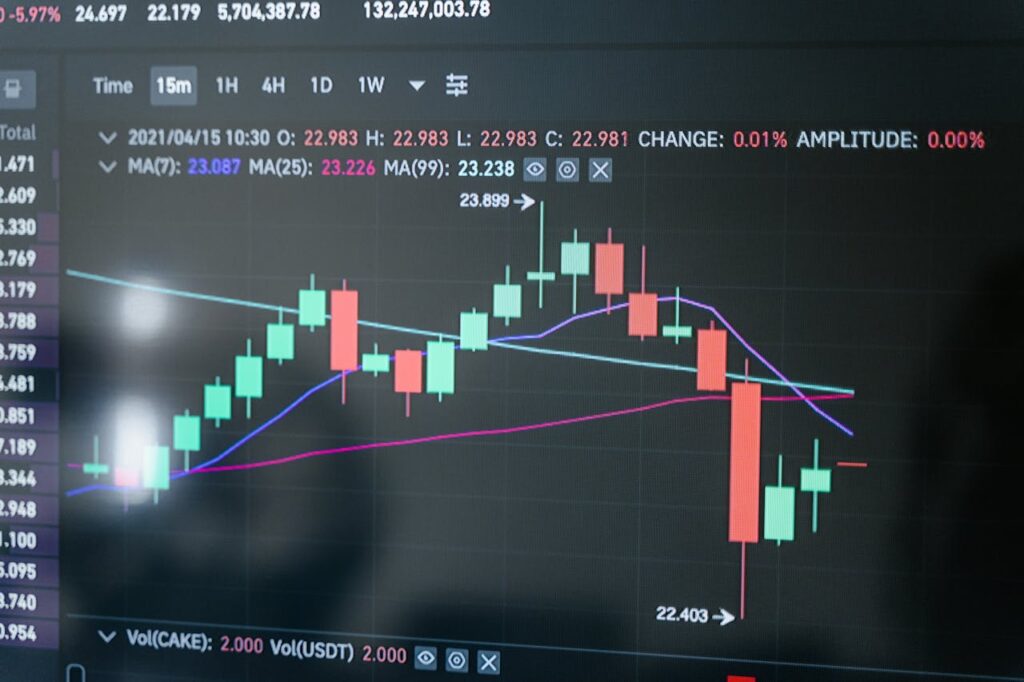
Much like in forex markets, the principles behind the best forex trading strategies — such as trend following, breakout setups, and momentum confirmation — also form the backbone of successful crypto trading techniques.
4.1. Understanding Timeframes in Crypto Trading
Because markets run 24/7, traders in crypto operate on multiple timeframes — from seconds to years.
Each timeframe requires a different mindset, strategy, and set of tools.
| Type | Typical Duration | Example Objective | Suitable For |
|---|---|---|---|
| Scalping | Seconds–minutes | Capture small intra-minute price swings | Algorithmic traders |
| Day Trading | Minutes–hours | End the day flat (no overnight risk) | Active traders |
| Swing Trading | Days–weeks | Ride medium-term momentum | Semi-active participants |
| Position Trading | Weeks–months | Trend-following with leverage | Experienced traders |
| Investing / HODL | 6+ months | Build long-term crypto exposure | Retail & institutions |
4.1.1. Scalping and High-Frequency Trading (HFT)
Definition
Scalping in crypto trading means taking advantage of micro-price movements within seconds or minutes — often executed by bots.
Key Stats
- Average scalp targets: 0.05%–0.3% per trade
- Average daily trade count (per bot): 200–1,000+
- Exchanges with lowest fees for scalpers: Binance, Bybit, OKX
Example Setup
- Pair: BTC/USDT
- Timeframe: 1-minute chart
- Indicators: VWAP, RSI(5), and short EMA crossovers
- Goal: Buy when RSI < 30 near VWAP and exit within 0.25–0.5% gain
Advantages
✅ High frequency = compounding gains
✅ Uncorrelated with long-term market direction
Risks
❌ Requires low latency and bots
❌ Fees and slippage eat returns
❌ Not suitable for beginners
4.1.2. Day Trading Strategies
Day trading is one of the most common approaches in crypto trading because volatility is constant and the market never closes.
Core Techniques
- Breakout Trading: Trade price moves beyond support/resistance.
- Volume Confirmation: Only enter when volume exceeds the 20-day average.
- EMA Strategy: Buy when 20EMA > 50EMA, sell when 20EMA < 50EMA.
Real Example (2025 BTC)
| Date | BTC Price | 24h Volatility | Strategy Outcome |
|---|---|---|---|
| Oct 12, 2025 | $107,000 | 4.8% | 3 profitable intraday breakouts |
| Oct 25, 2025 | $113,000 | 5.1% | Range-bound, 1 fakeout |
| Nov 1, 2025 | $110,800 | 3.9% | Successful short on reversal |
Average professional day-trading return: 0.7–1.5% daily, with 55–65% win rates.
4.1.3. Swing Trading (Days–Weeks)
Experienced traders often move away from indicator-heavy systems toward price action trading, applying the same clean chart-reading logic to identify reversals and continuation setups in crypto trading.
Swing trading captures medium-term momentum which is ideal for traders who can’t monitor the market 24/7 but still want active exposure to crypto trading.
Tools
- 4-hour and daily charts
- RSI (14), MACD, and Fibonacci retracements
- Volume and funding rate trends
Example Setup
- Pair: ETH/USDT
- Entry: Pullback to 38.2% Fibonacci level
- Stop Loss: Below 61.8% retracement
- Exit: Prior swing high
Data Insight
Between 2019–2024, swing strategies on BTC had an average Sharpe ratio of 1.4, higher than S&P 500 (0.9).
Source: Messari & CryptoQuant backtests, 2025.
4.1.4. Position Trading (Weeks–Months)
Position trading uses macro trends and fundamental catalysts — like Bitcoin halving cycles, ETF approvals, or regulatory news.
Common Methods
- 50-day and 200-day moving average crossovers
- On-chain data (active addresses, realized cap)
- Funding rate divergence
Example (Bitcoin 2023–2025)
| Cycle | Average Price Gain | Duration | Key Catalyst |
|---|---|---|---|
| 2020–2021 | +402% | 13 months | DeFi + NFTs |
| 2022–2023 | +146% | 9 months | Institutional inflows |
| 2024–2025 | +210% (so far) | 11 months | BTC ETF approvals |
Position trading yields strong results when backed by macro catalysts rather than emotion.
4.1.5. Long-Term Investing (HODL & DCA)
Dollar-Cost Averaging (DCA)
Invest a fixed amount regularly regardless of price.
Example:
- Invest $500 monthly in BTC from Jan 2020–Nov 2025.
- Total invested = $35,000.
- Portfolio value ≈ $154,000 (+340%)
(Source: CoinMetrics backtest.)
Benefits
✅ Reduces timing risk
✅ Outperforms 70% of short-term traders over long horizons
Risks
❌ Long drawdowns
❌ Requires strong conviction and secure custody
4.1.6. DeFi & Passive Yield Strategies
New traders can even automate their journey using social or copy trading for beginners models, mirroring successful portfolios before developing their own crypto trading strategies.
DeFi platforms extend crypto trading beyond buying and selling.
| Strategy | Platform | Typical APY (2025) | Risk |
|---|---|---|---|
| LP on Uniswap ETH/USDC | Uniswap v4 | 7–12% | Impermanent loss |
| Staking SOL | Solana | 6.5% | Lockup risk |
| Lending USDT | Aave v4 | 4.2% | Smart contract risk |
| Liquid staking (stETH) | Lido | 4.8% | Smart contract + peg risk |
Professional traders now hedge spot positions with DeFi yields, creating market-neutral strategies with 8–12% APY.
Summary
| Strategy | Timeframe | Risk Level | Potential Annual ROI |
|---|---|---|---|
| Scalping | Seconds–minutes | Very High | 50–200% |
| Day Trading | Hours | High | 30–80% |
| Swing | Days–weeks | Medium | 25–60% |
| Position | Months | Moderate | 15–40% |
| Long-Term / DCA | Years | Low | 10–30% |
| DeFi Yield | Passive | Medium | 5–15% |
Each of these can coexist in a diversified crypto trading portfolio.
5. Risk Management, Taxes, and Security
Effective risk management in trading is the foundation for long-term survival in volatile crypto trading markets.
5.1. Why Risk Management Matters
According to Glassnode (2025):
83% of wallet addresses that experienced 50% drawdowns in one year never recovered to previous highs.
That shows why crypto trading requires systematic risk control.
5.2. Position Sizing Formula
Basic position size rule:
Example:
- Balance = $10,000
- Risk = 2%
- Stop Loss = 5%
→ Position = $10,000 × 0.02 / 0.05 = $400
So only $400 exposure per trade.
5.3. Setting Stop-Loss and Take-Profit Levels
| Strategy Type | Stop-Loss | Take-Profit | Risk:Reward |
|---|---|---|---|
| Scalping | 0.25–0.5% | 0.5–1% | 1:2 |
| Day Trading | 1–2% | 3–5% | 1:2–1:3 |
| Swing | 5–8% | 12–20% | 1:2+ |
| Position | 10–15% | 30–50% | 1:3+ |
Always pre-define exits before entering a trade. Over 60% of losing traders (Binance Research, 2025) lacked defined risk/reward ratios.
5.4. Behavioral Psychology in Crypto Trading
| Bias | Description | How to Counter It |
|---|---|---|
| FOMO | Fear of Missing Out on rallies | Follow plan, avoid chasing candles |
| Loss Aversion | Holding losers too long | Use mechanical stops |
| Overtrading | Trading too frequently | Set daily loss limits |
| Confirmation Bias | Seeking bullish opinions only | Analyze both sides of the market |
Professional traders control psychology first — profit follows.
5.5. Security in Crypto Trading
Using hardware wallets like Ledger is one of the safest methods to secure your long-term crypto trading holdings. Security remains one of the top risks. According to Chainalysis 2025:
- Total crypto hacks YTD: $2.1 billion stolen
- Primary vectors: phishing, smart contract exploits, and exchange breaches
Best Practices
- Use hardware wallets (Ledger, Trezor) for storage
- Enable 2FA and withdrawal whitelists on exchanges
- Keep less than 10% of assets on active trading platforms
- Verify smart contracts before connecting wallets
- Never click unknown airdrop links
5.6. Taxes in Crypto Trading (2025 Overview)
Staying informed about recent regulatory updates helps traders remain compliant as governments refine crypto tax laws.
U.S. Example:
| Activity | Tax Treatment | Notes |
|---|---|---|
| Spot Trading | Capital Gains | Short- or long-term depending on holding period |
| Futures / Options | Section 1256 Contracts (60/40 rule) | Lower blended rate |
| Staking / Yield | Ordinary Income | Taxed at receipt |
| NFTs | Collectibles (28% max rate) | Specialized category |
Always maintain trade logs and cost basis — many exchanges export CSVs.
Crypto-specific tax tools (CoinTracking, Koinly, Accointing) automate this for over 10M users globally.
Summary
- Never risk more than 2% per trade
- Diversify across 4–6 assets minimum
- Secure funds via hardware wallets
- Track every trade for taxes
- Control emotions; follow system rules
Crypto trading success = 80% discipline + 20% analysis.
6. Practical Checklist & 12-Month Plan
6.1. Month-by-Month Plan
| Month | Focus | Milestone |
|---|---|---|
| 1 | Research & education | Learn market basics, wallets, exchanges |
| 2 | Setup accounts | Open CEX & DEX wallets, test small trades |
| 3 | Build watchlist | Choose 5–10 liquid assets |
| 4 | Develop strategy | Backtest 3 trading methods |
| 5–6 | Paper trade | Simulate trades, log results |
| 7 | Go live with small capital | Risk ≤1% per trade |
| 8–9 | Track performance | Use CoinTracking / Excel logs |
| 10 | Optimize strategy | Remove low-performing setups |
| 11 | Diversify | Add DeFi yield or swing setups |
| 12 | Review & scale | Increase size gradually (max 3–5x capital) |
Consistency and record-keeping are vital in crypto trading because of its 24/7 volatility.
6.2. Performance Tracking Template
Following trader experiences on Reddit can reveal valuable sentiment insights before major market moves.
| Metric | Example | Target |
|---|---|---|
| Monthly ROI | +6.2% | +5–8% |
| Win Rate | 61% | >55% |
| Avg. Risk:Reward | 1:2.4 | >1:2 |
| Max Drawdown | -12% | <15% |
| Sharpe Ratio | 1.6 | >1.2 |
Use these metrics monthly to self-audit your crypto trading performance.
6.3. Essential Tools List (2025)
While many professionals still rely on legacy software like trading on MT4, most modern crypto trading platforms offer comparable charting, automation, and order management features directly in-browser.
| Category | Tool / Platform | Notes |
|---|---|---|
| Charting | TradingView, CoinGlass | Advanced indicators |
| Analytics | Glassnode, Nansen, Messari | On-chain and sentiment data |
| Execution | Binance, OKX, Coinbase | High-liquidity venues |
| Automation | 3Commas, Pionex, Coinrule | Bot strategies |
| Portfolio Tracking | CoinStats, Zapper | DeFi + CEX combined view |
| Security | Ledger, Fireblocks | Hardware + institutional custody |
| Tax | Koinly, CoinTracking | Global tax compliance |
6.4. 2025 Benchmarks
| Benchmark | 2024 | 2025 (Est.) | Trend |
|---|---|---|---|
| Global Market Cap | $2.7T | $3.4T | ▲ +26% |
| 24h Volume | $98B | $129B | ▲ +31% |
| Active Traders | 520M | 659M | ▲ +26% |
| Avg. BTC Price | $67K | $110K | ▲ +64% |
| Institutional Share | 25% | 35% | ▲ Growing |
Crypto trading is expanding rapidly; institutional adoption is now a permanent pillar.
Final Takeaways
- Treat crypto trading as a business — track, audit, and manage risk.
- Combine CEX liquidity with DEX transparency.
- Diversify strategies: spot, derivatives, and DeFi yield.
- Never over-leverage. Protect capital first.
- Stay compliant and secure — regulators are tightening oversight.
- Keep learning. The landscape evolves monthly.
Conclusion
Crypto trading has matured into a sophisticated global market worth over $3.4 trillion, attracting millions of traders and institutions alike.
The combination of transparency, volatility, and innovation makes it both thrilling and challenging.
To thrive:
- Master technical and on-chain analysis.
- Manage risk ruthlessly.
- Embrace technology — automation, AI, and analytics.
- Build long-term conviction alongside short-term execution.
Those who balance discipline, adaptability, and curiosity will continue to prosper as crypto trading reshapes the financial world in the years ahead.
